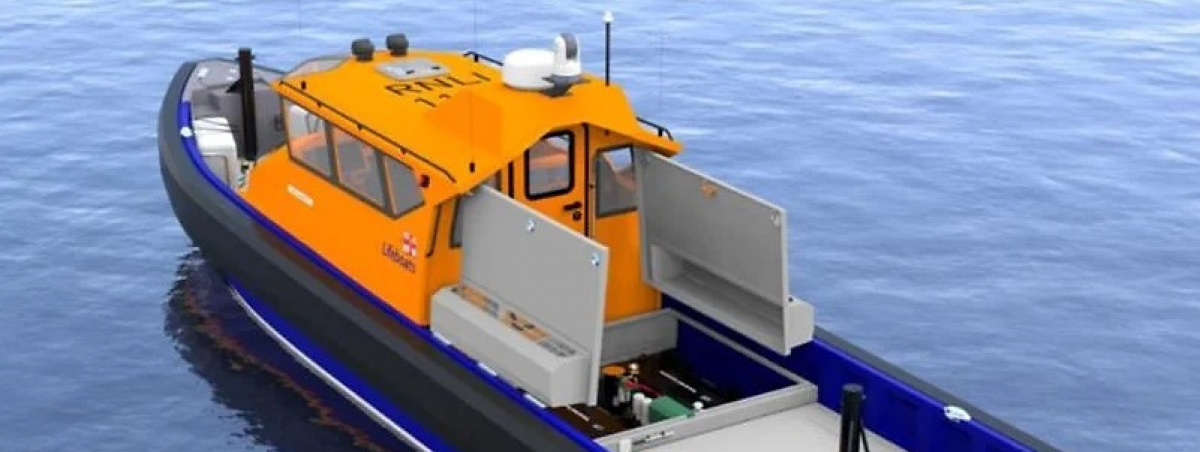
The Royal National Lifeboat Institution (RNLI) is preparing to introduce a new Coastal Lifeboat designed to strengthen crew safety and improve rescue capability closer to shore, with the first operational vessel expected to enter service in 2028.
The programme is part of the charity’s long-term fleet modernisation strategy, which aims to match lifeboat capabilities to changing rescue demands around the coasts of Ireland and Britain. According to Afloat.ie, the RNLI plans to build eight boats in the first year of production, following prototype trials scheduled for 2027. Production is expected to involve manufacturer Zodiac and the RNLI’s Lifeboat Support Centre in Poole, Dorset.
The RNLI is one of the principal maritime rescue charities operating around the UK and Irish coastlines, relying on volunteer crews and specialist vessels to respond to emergencies at sea. Its fleet strategy is designed to ensure rescue assets are suited to local conditions while supporting the safety of the people who operate them.
The new Coastal Lifeboat is intended to bridge the capability gap between the Atlantic 85 inshore lifeboat and the Shannon-class all-weather lifeboat. Its design includes a watertight wheelhouse and self-righting capability, offering additional protection for crews working in challenging sea conditions. Optimised for operations between 10 and 25 nautical miles offshore, it is also intended to improve endurance, towing, casualty recovery and crew comfort.
For Health & Safety professionals, the programme illustrates how equipment design can reduce operational exposure in demanding environments. Improved protection, enhanced casualty-recovery arrangements and greater endurance can support crews during complex rescues, while involving volunteer lifeboat personnel in design reviews helps ensure that operational experience informs equipment requirements. The RNLI has said that 98% of its lifeboat launches take place within 10 nautical miles of the coast, underlining the importance of effective nearshore capability.
The development also reflects a structured approach to fleet investment. The RNLI has tested three candidate designs with more than 50 volunteers and staff before selecting the Zodiac Hurricane ZH 1129 as the basis for the new vessel. Its official fleet strategy sets out a longer-term programme of capability changes, including the introduction of the Coastal Lifeboat in 2028 and further improvements to existing lifeboat classes.
For the sector, the programme shows how safety-led equipment investment can combine practical crew feedback, design evaluation and long-term fleet planning. The RNLI has not yet confirmed which Irish stations will receive the first Coastal Lifeboats, but the wider initiative represents a significant step towards improving rescue capability and supporting volunteer safety across its network.
Source: Afloat.ie / RNLI







.png)