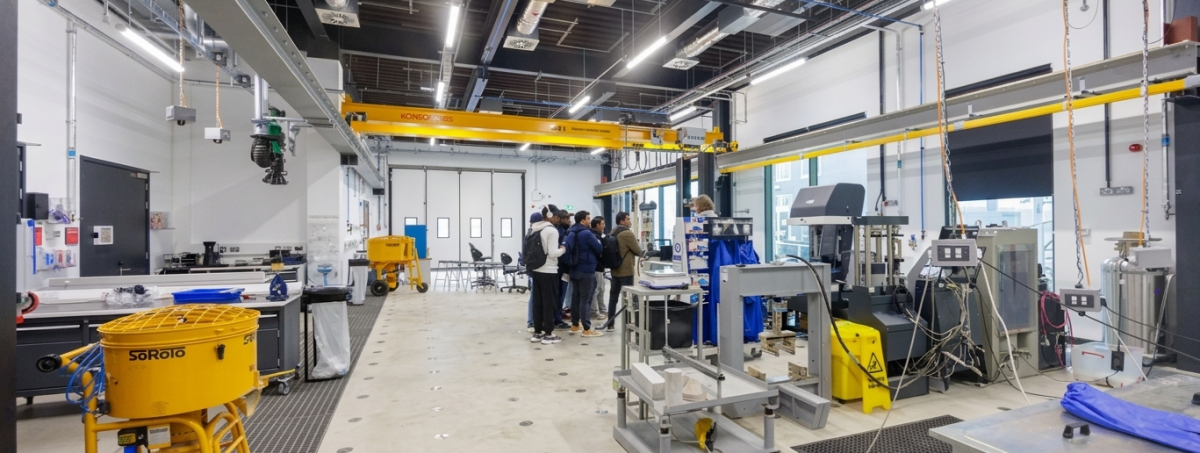
Research by the University of Hertfordshire and construction specialist Ambar Kelly aims to improve fire safety in high-rise buildings by examining how smoke and flames can travel through vertical service shafts. The collaboration is targeting an often-overlooked part of building design, with potential benefits for construction teams, facilities managers and the people who live and work in multi-storey properties.
Announced on 2 November 2026, the project will investigate the chimney effect, where heat, smoke and gases rise through vertical spaces and can spread between floors. According to BBC News, the research will focus on riser shafts, which carry essential mechanical, electrical and plumbing services through buildings. Lift shafts, stairwells and ductwork can also create pathways for fire and smoke if compartmentation and fire-stopping measures are inadequate.
The work has a direct Health and Safety application. Properly designed risers must provide safe access for maintenance while preserving the fire-resistant barriers that separate building compartments. Poorly protected openings or unsuitable materials can compromise those barriers, allowing smoke and flames to travel beyond their point of origin. The UK Government’s guidance for managing safety risks in high-rise residential buildings identifies service risers, fire stopping and compartmentation as important elements of preventing fire spread and protecting escape routes.
The collaboration combines academic research with practical construction expertise. The University of Hertfordshire’s School of Physics, Engineering and Computer Science will contribute scientific knowledge, while Ambar Kelly brings specialist experience in riser-zone design and safety solutions. Based in Welwyn Garden City, the company develops its RiserSafe system, a modular steel flooring solution designed to provide collective fall protection and support fire compartmentation during construction and throughout a building’s life. Its technical information illustrates how early design decisions can address both worker safety and longer-term building protection.
For facilities managers and building owners, the research reinforces the importance of treating service shafts as part of a building’s overall fire-safety strategy. Regular inspection, appropriate fire stopping and careful control of alterations are essential because maintenance work and new service installations can affect existing protective barriers. Better evidence on fire behaviour could also help designers and contractors make more informed decisions when specifying materials and protection systems.
For the sector, the lesson is direct: combining scientific research with specialist construction knowledge can turn overlooked building features into opportunities for stronger fire protection. As high-rise developments become increasingly complex, better understanding of riser safety can support safer working environments, more resilient buildings and greater confidence for occupants.
Source: BBC News / University of Hertfordshire / UK Government / Ambar Kelly









.png)