

Proposed replacement of deteriorating high-level statues demonstrates how proactive heritage maintenance can address falling-masonry risks while protecting historic buildings and public safety.
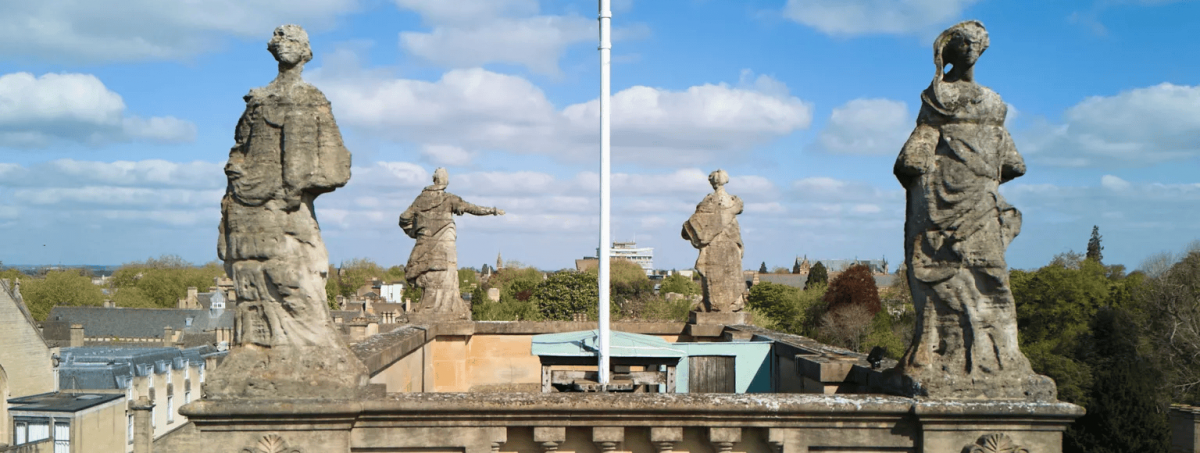
Trinity College Oxford has received approval to replace four deteriorating statues on its chapel tower after concerns over their condition and the potential risk to public safety.
The statues, which represent theology, law, medicine and mathematics, date from the 1820s and have been exposed to weathering for around two centuries. The BBC News report states that the replacement has been considered necessary within two to three years to address safety concerns and protect the building fabric.
For health and safety teams, the project demonstrates the importance of identifying deterioration in high-level building elements before it develops into a public safety incident. Falling masonry can create risks for pedestrians, building occupants and maintenance personnel, particularly around historic structures where architectural features may be difficult to inspect or access.
The proposed works will involve specialist masons using 3D scan data from the existing statues to reproduce the figures. The replacement pieces will be assembled from stone blocks and finished by hand, with the planning proposals supported by Historic England and the Oxford Preservation Trust.
The approach also highlights the importance of combining conservation requirements with safe systems of work. An officer's report supported the replacement subject to conditions requiring careful working methods, recognising that construction and installation activity at the top of a historic tower presents its own risks.
For facilities and estates teams responsible for heritage properties, the project provides a practical example of preventative asset management. Regular inspection of exposed architectural features can identify deterioration early, allowing remedial action to be planned before structural defects create immediate risks to people or require emergency intervention.
The decision also reflects the wider challenge of maintaining historic buildings while meeting contemporary safety expectations. Rather than removing the statues entirely, the approved approach seeks to reproduce their appearance while addressing the deterioration that has developed through prolonged exposure to the elements.
The proposed works will also introduce new lighting and a taller flagpole. These additional changes will need to be incorporated into the wider management of the tower, including access, installation activity and maintenance requirements associated with working at height.
The project demonstrates why safety assessments of heritage properties need to consider both the condition of individual building elements and the environment below them. Where deteriorating materials are positioned above busy public areas, preventative replacement can form an important part of a broader risk-management strategy.
For the sector, the Trinity College project highlights how proactive maintenance can protect people while preserving valuable historic assets. For health and safety professionals, the wider lesson is that identifying and addressing deteriorating building elements before failure occurs remains an important part of preventing falling-object risks and maintaining safe public environments.
Source: BBC News / Oxford City Council / Historic England / Oxford Preservation Trust











.png)