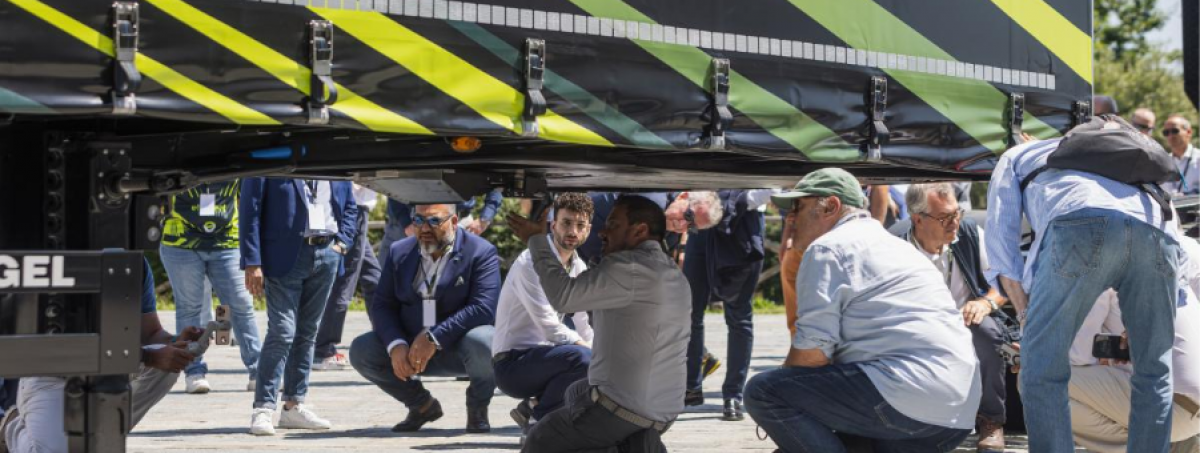
Road safety in the haulage industry depends on much more than the technology fitted to modern heavy goods vehicles. It also relies on the everyday decisions made by drivers, loaders, fleet managers and other professionals responsible for getting goods safely from one location to another. The Safer Truck initiative in Italy, recognised by the European Road Safety Charter as its November 2026 Good Practice of the Month, demonstrates how practical training can help bring these responsibilities into sharper focus. As reported by HGV Ireland, the project uses a real articulated truck as a mobile learning environment, allowing participants to examine operational risks through demonstrations rather than relying solely on classroom instruction.
The importance of this approach is clear in Ireland. The Road Safety Authority's analysis of work-related road use found that 25% of drivers involved in fatal road collisions between 2020 and 2024 were driving for work. The RSA also identifies work-related journeys as an important area for intervention through better planning and management. These findings reinforce the need for employers to treat road safety as an integral part of operational management, rather than something addressed only through driver reminders or periodic compliance checks.
Practical training can help businesses make that responsibility more tangible. Safer Truck covers areas including load securing, vehicle preparation, stability, risk assessment and the capabilities and limitations of advanced driver assistance systems. According to the European Road Safety Charter's project assessment, the initiative has reached 80 participants directly, with a further 95 representatives attending its launch. Its evaluations indicated improved awareness of key risks, although these reported outcomes should not be confused with independently measured reductions in collisions. The wider lesson is that training can be more meaningful when people have the opportunity to see how safety decisions affect real vehicles and working conditions.
This has particular relevance for Irish transport businesses managing vehicle movements, loading areas and maintenance activities. The Health and Safety Authority's workplace transport guidance identifies risks such as vehicles overturning, workers being struck or run over, falls from vehicles and incidents involving untrained drivers. Addressing these hazards requires coordination between drivers, warehouse teams, workshop personnel and management. Practical demonstrations, regular briefings and task-specific training can help reinforce the connection between individual actions and wider workplace safety.
The opportunity for the haulage sector is to make prevention a consistent part of how operations are planned and delivered. Investing in safer vehicles remains important, but equipment must be supported by competent people, effective procedures and a workplace culture that encourages everyone to identify risks before a journey begins. Safer Truck provides a useful example of how training can bring those elements together. For Irish operators, the wider message is clear: safer journeys start with better preparation, shared responsibility and practical knowledge that workers can apply every day.







.png)